Ankle Dorsiflexion: The Forgotten Foundation for Stability and Jumping
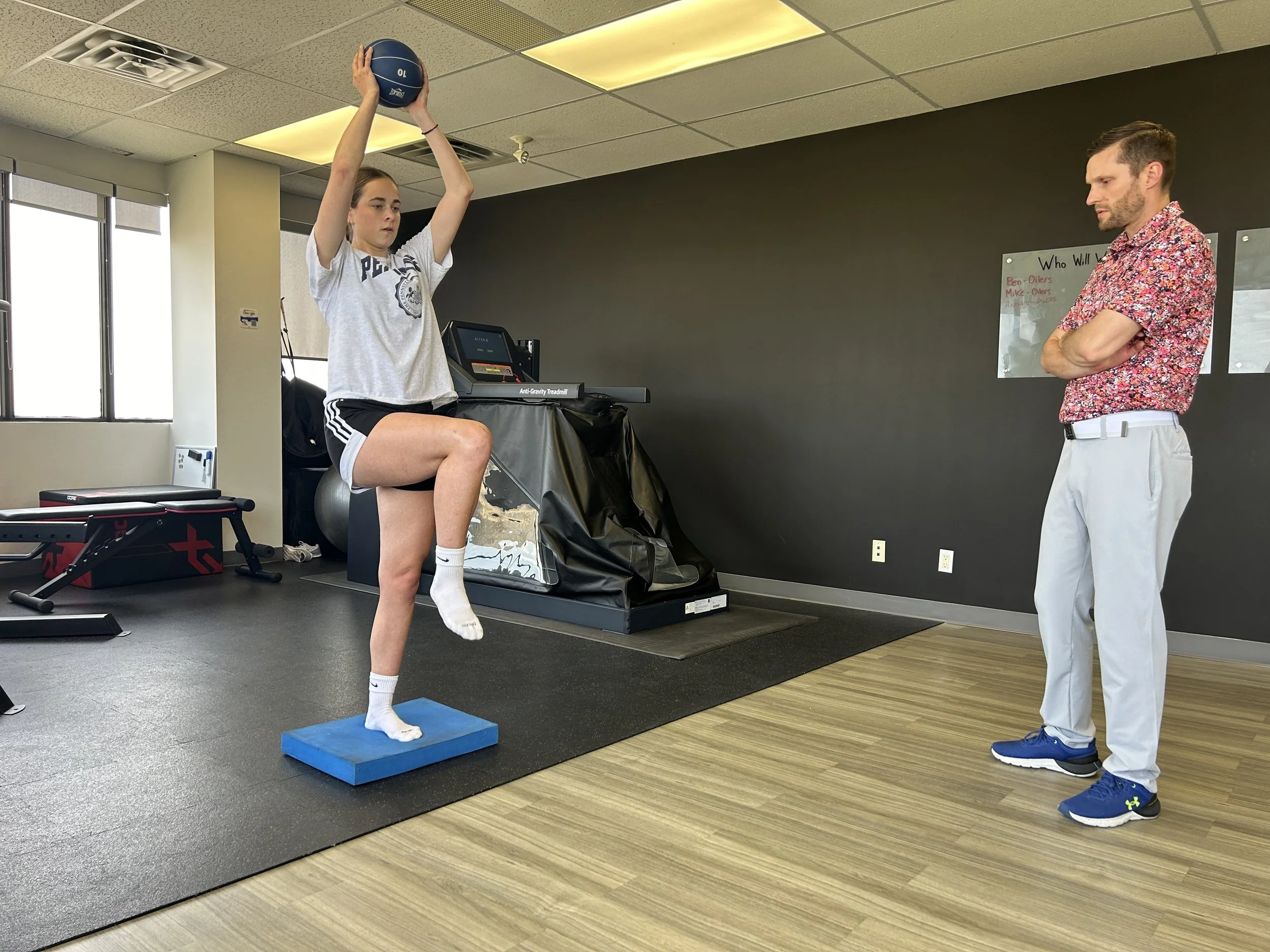
In CrossFit, we often obsess over squats, cleans, and Olympic lifts, but one joint frequently gets overlooked: the ankle.
Specifically, ankle dorsiflexion: the ability to bring your toes toward your shin. It is a foundational movement pattern that affects everything from squats and lunges to running, jumping, and landing mechanics. Limited dorsiflexion can silently undermine your performance and increase injury risk.

Why Ankle Dorsiflexion Matters
Your ankles are the foundation of your kinetic chain. If they’re restricted:
Squat depth suffers → you compensate with hips or lower back
Knee valgus increases → higher risk for knee pain or injury
Jumping and landing mechanics degrade → force absorption suffers
Strong, mobile ankles allow for efficient force transfer from the ground up, improve balance, and reduce compensations in your knees, hips, and spine.
Common Signs of Limited Dorsiflexion
Heels lift off the floor during squats or lunges
Excessive forward lean during lifts
Knee or shin pain during running or jumping
Stiffness or soreness around the calf or Achilles
If any of these sound familiar, it’s time to start addressing your ankle mobility, not just for today’s WOD, but for long-term performance and joint health.
Top Exercises for Improving Ankle Dorsiflexion
Here are two of the most effective exercises for targeting dorsiflexion, both of which can be easily integrated into your warm-up or mobility routine:
1. Banded Ankle Mobilizations
How to do it: Anchor a resistance band around a sturdy object at ankle height. Step into the band so it’s just above your ankle, facing away from the anchor. Bend your knee forward over your toes while keeping your heel on the ground. Hold, then return to start. Repeat for both ankles.
Why it works: The band provides a posterior glide to the talus bone, which is essential for proper dorsiflexion. This helps your ankle move more freely under load, improving squat depth and stability.
Coaching tips: Keep your foot flat and control the motion. Move slowly into end range, never force it, and maintain a neutral knee position to avoid valgus collapse.
2. Weighted Elevated Ankle Mobilizations
How to do it: Place one foot on an elevated surface (like a bench or box) with your heel down. Slowly bend your knee forward over your toes, adding a light weight across your knee for increased pressure. Return to start. Repeat on both sides.
Why it works: Elevating the forefoot and adding resistance helps improve both the mobility and strength of the ankle in dorsiflexion, teaching your joint to move under load like it will during squats, lunges, and Olympic lifts.
Coaching tips: Control the descent and ascent. Focus on feeling a stretch through the Achilles and calf without letting the heel lift off the platform.
Applying This to Training
Add 2–3 sets of 10–15 reps of each exercise into your warm-up for WODs, strength sessions, or Olympic lifts.
Combine mobility drills with ankle strengthening (calf raises, toe walks) to build both range and control.
Film your squats or cleans periodically to check heel lift or knee tracking, and adjust your ankle work accordingly.
Need Help Unlocking Your Ankles?
Ankle dorsiflexion may be small, but it’s mighty. Addressing this “forgotten foundation” can improve squat depth, protect your knees, enhance jumping power, and even improve balance in high-skill movements.
At Elevate Rehabilitation and Performance, we assess ankle mobility, teach targeted mobilization and strengthening exercises, and help you translate improved ankle mechanics directly to performance in the gym.
📍 710 Dorval Dr Unit 520, Oakville, ON
💪 Proud partner of RadixGym
📞 (289) 835-2949
💻 https://www.elevaterehabilitation.com/