
Beyond the Burn: The Mechanical Truth Behind Your Runner’s High and Why It Keeps Slipping Away

The First Mile Problem
For most people, the first mile of a run isn’t a glide; it’s a grit-your-teeth battle against what sports scientists often call the peak of suckiness. While the uninitiated tolerate the pavement as a necessary evil for heart health, seasoned athletes experience something entirely different: a rhythmic, euphoric escape.
Bridging the gap between a grueling chore and that blissful “zone” requires more than better lungs. It demands a deeper look at identity, psychology, and the unforgiving physics of human gait.
The Runner’s High Is a Rhythmic State, Not a Guarantee
We often talk about the runner’s high as if it’s a light switch that flips the moment you lace up. In reality, it’s a physiological reward for consistency.
That chemical cocktail of endorphins and dopamine usually doesn’t arrive until you’ve pushed past the unfit stage, often after a month or more of consistent training.
The threshold is deeply individual. Some runners find flow at 1.5 km, others at 5 km, and some within the first 100 meters. It’s less about distance and more about reaching a rhythmic state where the internal to-do list finally quiets.
The Identity Trap: Why Running Injuries Hurt More Than Tissue
When runners get injured, we tend to fixate on ligaments, bones, or tendons. But the psychological loss is often more damaging than the physical one.
Athletes are often treated like high-performance machines. We expect resilience without acknowledging the emotional cost. Nobody yells at you for a bad day at the office, yet athletes are expected to absorb failure and pain without consequence.
For runners who rely on movement for mental health, injury removes their primary coping tool. This is the identity trap: when “runner” becomes the only label left.
Recovery isn’t just about healing tissue. It’s about reclaiming identity. That means focusing on what can be controlled: nutrition, cross-training, mindset - rather than mourning lost miles.
The 10% Rule and the Physics of “Too Much, Too Soon”
The most common mistake runners make is progressing volume faster than their tissues can tolerate.
Running is repetitive plyometric loading. Without proper conditioning, breakdown is inevitable. The 10% rule: never increasing weekly mileage by more than 10% - remains one of the most effective injury-prevention tools we have.
But volume is only half the equation.
Pulling vs Pushing: Why Your Gait Is Wasting Energy
Overstriding is one of the most destructive and inefficient running mechanics.
When your foot lands too far in front of your body, you’re forced to pull the ground toward you. This creates braking forces and increases stress through the posterior chain.
Think of holding a heavy textbook:
With your arm fully extended, fatigue sets in quickly. Hold it close to your body and you can carry it for hours. Overstriding forces muscles to work in that lengthened, weak position.
The fix is deceptively simple: land under your center of gravity and push the ground away behind you. This allows muscles to generate force from stronger, shortened positions.
Common Mechanical Faults That Keep Runners Injured
Overstriding: Leads to stiff landings and excessive braking forces
Overpronation: Arch collapse that sends stress up through the shin and knee
Weak Intrinsic Foot Muscles: A disengaged big toe limits propulsion and stability
These faults rarely exist in isolation - they compound over time.
Shoe Science: When Cushioning Becomes a Liability
Running shoes don’t fail dramatically - they fail quietly.
Most shoes expire between 500–700 km. Once the foam loses rebound, your body absorbs the impact instead.
Signs Your Shoes Are Done:
Foam Crease Test: Deep horizontal creases mean permanent compression
Tilt Test: Shoes that lean inward or outward have lost structural integrity
Tread Wear: Smooth outsole patches mean grip and support are gone
Just as important: are you in the right category? Stability shoes provide denser foam for overpronators, while neutral shoes assume a centered strike.
Stop Squatting, Start Stepping
The myth that runners shouldn’t lift weights is outdated - but bilateral squats alone miss the mark.
Running is unilateral. Training should reflect that.
Resilient mechanics start at the foot. Without big toe and intrinsic foot strength, the arch collapses and ankle stability disappears. From there, effective strength work includes:
Step-Ups and Step-Downs: Landing control and deceleration
Single-Leg RDLs: Posterior chain strength for uneven terrain
Single-Leg Calf Raises: Tendon resilience for repetitive impact
Strength doesn’t slow runners down - poor mechanics do.
Finding the Rhythm Again: Rebuilding Without Breaking Down
The runner’s high is not something you chase harder. It’s something you earn through rhythm, efficiency, and respect for the body’s current capacity.
For many runners, especially those returning from injury or prolonged time away, the desire to “feel normal again” pushes them back into full-impact running before their tissues, mechanics, or nervous system are ready. The result is often frustration, recurring pain, or a lingering sense that running just doesn’t feel the way it used to.
This is where smarter progression matters.
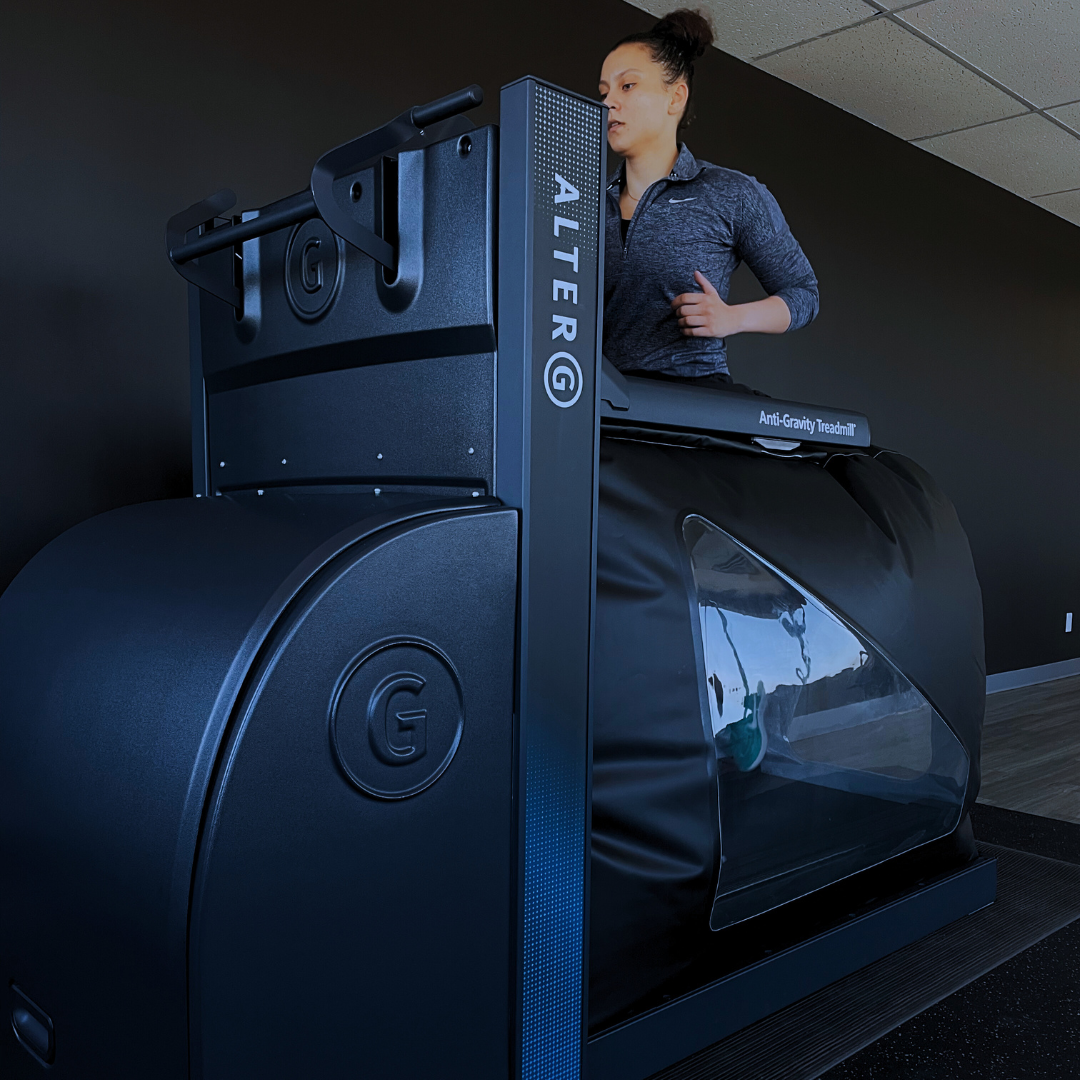
At Elevate, we use tools like the Anti-Gravity Treadmill to help runners reconnect with the rhythm of running without overwhelming their system. By temporarily unloading a percentage of bodyweight, athletes can reintroduce proper mechanics, cadence, and breathing patterns while minimizing impact forces. Instead of compensating through stiffness or overstriding, they can focus on landing under their center of mass, pushing the ground away, and moving efficiently again.
More importantly, it restores confidence.
For runners whose identity is tied to movement, being able to run, even at reduced load, can be a powerful psychological turning point. It keeps aerobic capacity alive, reinforces good habits, and allows progress to continue without the fear of setback. The Anti-Gravity Treadmill isn’t about avoiding stress; it’s about applying the right stress at the right time.
Longevity in running isn’t built by forcing your body into a rigid plan. It’s built by adapting when needed, listening closely, and adjusting intelligently. Some days the rhythm arrives quickly. Other days, the “peak of suckiness” lasts longer than expected.
The Takeaway: Run With Intention, Not Just Effort
Running is not just about mileage, grit, or pushing through discomfort. It’s about rhythm, mechanics, and understanding when your body needs progression versus support. When pain, injury, or frustration enters the picture, it is rarely because you are “not tough enough.” More often, it is a sign that something in the system needs attention.
At Elevate Rehabilitation, we take a whole-body, athlete-first approach to running health and recovery. Whether that means refining mechanics, building unilateral strength, managing training load, or using tools like the Anti-Gravity Treadmill to bridge the gap between rehab and real-world running, our goal is simple: help you move better, longer, and with confidence.
If you are feeling stuck, sidelined, or chasing a runner’s high that feels out of reach, we are here to help you find your rhythm again.
📍 710 Dorval Dr Unit 520, Oakville, ON
📞 (289) 835-2949
💻 https://www.elevaterehabilitation.com/
